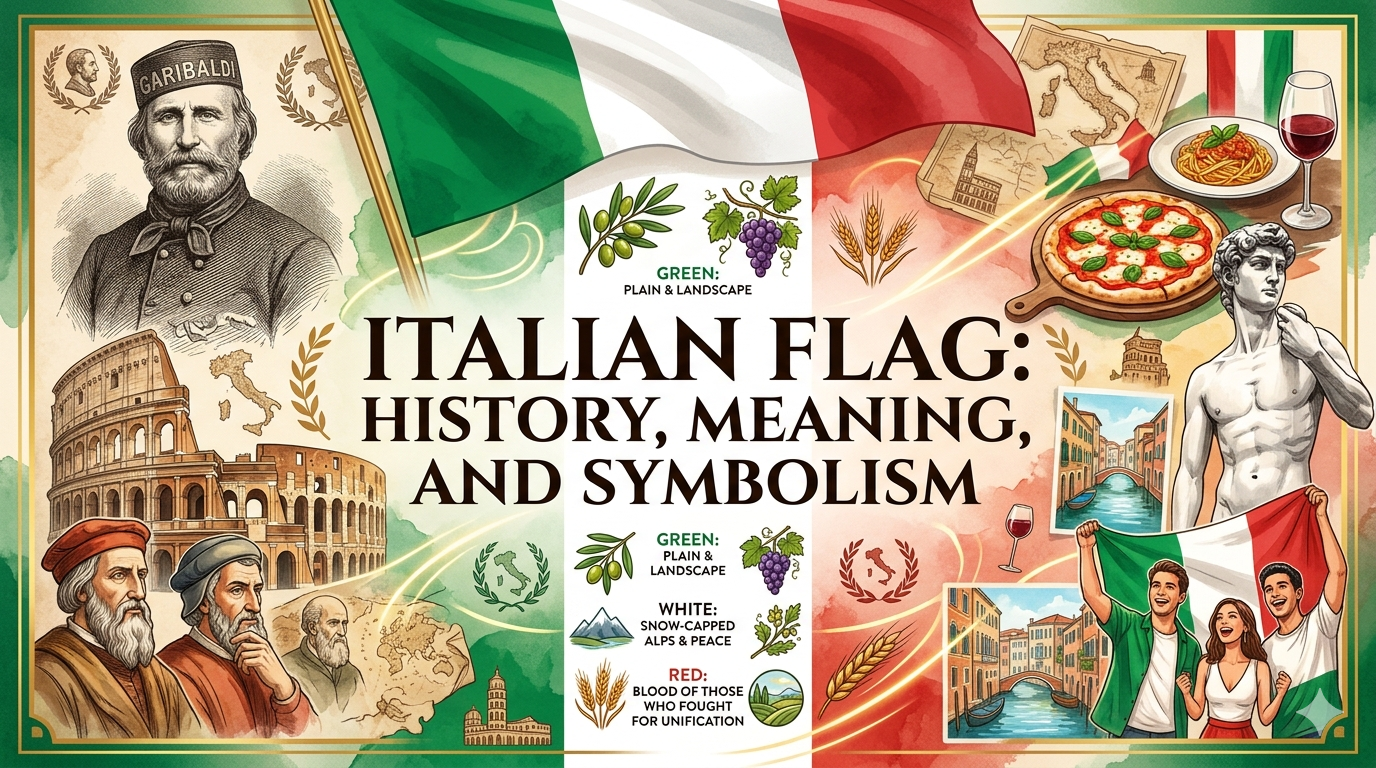
Italian Flag: History, Meaning, and Symbolism
The Italian flag is one of the most recognizable national symbols in the world. With its simple yet powerful design of three vertical stripes, the Italian flag represents unity, pride, and a rich historical journey. In this detailed guide, we will explore the origins, meaning, and significance of the Italian flag, along with its cultural importance.
What Does the Italian Flag Look Like?
The Italian flag consists of three vertical stripes of equal width:
- Green (left)
- White (center)
- Red (right)
This tricolor design is often referred to as “Il Tricolore” in Italy. The simplicity of the design makes it easy to recognize while holding deep historical meaning.
History of the Italian Flag
The origins of the Italian flag date back to the late 18th century. Its design was inspired by the tricolor flags that became popular during the French Revolution. At that time, revolutionary ideas of liberty and equality were spreading across Europe.
In 1797, the first version of the Italian flag was adopted by the Cisalpine Republic, a state created under the influence of Napoleon Bonaparte. Initially, the stripes were arranged horizontally, but later they were changed to vertical stripes, similar to the French flag.
The modern Italian flag as we know it today was officially adopted on January 1, 1948, when Italy became a republic.
Meaning of the Colors in the Italian Flag
The colors of the Italian flag carry symbolic meanings that reflect the country’s identity:
- Green – Represents hope, the country’s lush landscapes, and freedom
- White – Symbolizes peace and honesty, often associated with the snow-capped Alps
- Red – Stands for courage, strength, and the blood shed during wars for independence
These meanings make the Italian flag more than just a national emblem—it tells a story of struggle, unity, and pride.
Italian Flag in Modern Times
Today, the Italian flag is proudly displayed across government buildings, schools, and homes throughout Italy. It is especially visible during national celebrations such as Republic Day on June 2.
The flag also plays an important role in international events like sports competitions, where athletes represent Italy under the banner of the Italian flag. Whether it’s football, the Olympics, or cultural exhibitions, the flag symbolizes national pride on a global stage.
Differences Between Italian Flag and Similar Flags
The Italian flag is often confused with other tricolor flags, especially:
- The Irish flag (green, white, orange)
- The French flag (blue, white, red)
However, the Italian flag is unique in its color shades and arrangement. Its green-white-red combination has become a distinct identity for Italy.
Cultural Importance of the Italian Flag
The Italian flag is deeply connected to the country’s culture and traditions. It appears in:
- National holidays and festivals
- Italian cuisine presentations (like pizza and pasta colors)
- Fashion and design inspired by national pride
For Italians, the flag is not just a symbol of the state but also a reflection of their heritage and unity.
Interesting Facts About the Italian Flag
- The Italian flag is also known as “Il Tricolore”
- Italy celebrates “Tricolore Day” on January 7 each year
- The design has remained unchanged since 1948
- It is one of the oldest tricolor flags still in use today
Conclusion
The Italian flag is a powerful representation of Italy’s history, values, and national pride. From its revolutionary origins to its modern-day significance, the flag continues to unite people and symbolize the spirit of the nation. Understanding the Italian flag gives deeper insight into Italy’s culture and the journey that shaped this iconic emblem.