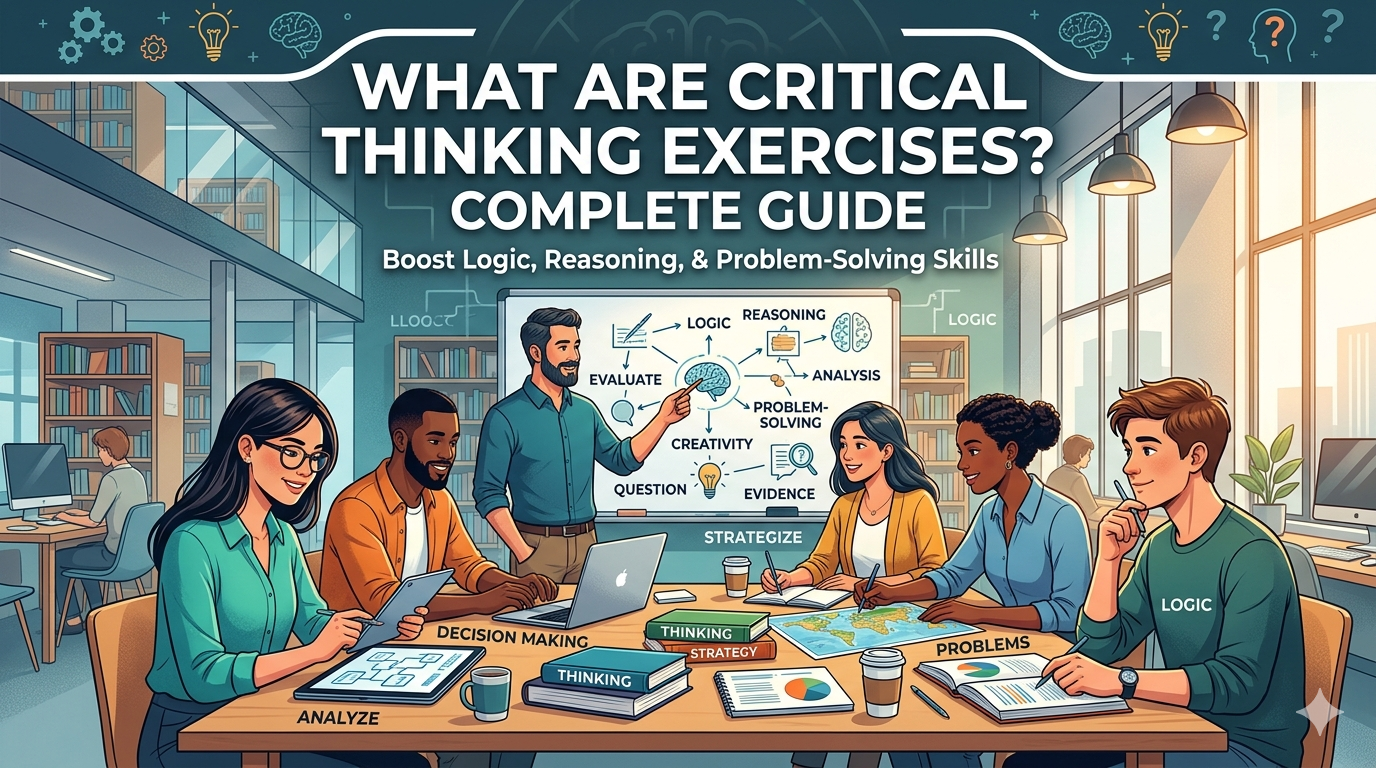
What Are Critical Thinking Exercises?
These exercises are designed to enhance your ability to analyze information, evaluate different perspectives, and solve problems effectively. Whether you are a student, professional, or simply someone who wants to improve cognitive skills, engaging in these exercises can significantly sharpen your mind.
Critical thinking is not just about thinking harder—it’s about thinking smarter. It involves questioning assumptions, identifying biases, and making reasoned judgments. By practicing critical thinking exercises, individuals can develop a structured approach to thinking that leads to better outcomes in both personal and professional life.
Why Are Critical Thinking Exercises Important?
Critical thinking is a fundamental skill that affects nearly every aspect of life. From making daily decisions to solving complex problems at work, the ability to think critically can make a significant difference. Critical thinking exercises help train the brain to process information more effectively and avoid common thinking errors.
One of the main benefits of these exercises is improved decision-making. When you practice analyzing situations from multiple angles, you are less likely to jump to conclusions. Instead, you evaluate evidence carefully before forming an opinion. Additionally, these exercises improve creativity by encouraging you to explore alternative solutions and think outside the box.
Another key advantage is better communication. When you think critically, you can present your ideas more clearly and support them with logical reasoning. This is especially valuable in discussions, debates, and professional settings.
Types of Critical Thinking Exercises
There are many different types of critical thinking exercises, each designed to target specific cognitive skills. Here are some of the most effective ones:
1. Problem-Solving Scenarios
These exercises present a situation that requires a solution. You must analyze the problem, identify possible solutions, and choose the best one. This helps improve logical reasoning and decision-making.
2. Brain Teasers and Puzzles
Puzzles like Sudoku, riddles, and logic games challenge your brain to think in new ways. They enhance pattern recognition and analytical thinking.
3. Debates and Discussions
Engaging in debates forces you to consider multiple viewpoints. It also helps you develop strong arguments and defend your position with evidence.
4. Case Studies
Case studies are real-life scenarios that require analysis and evaluation. They are commonly used in education and business training to develop critical thinking skills.
5. Reflection Exercises
These involve analyzing your own thoughts and decisions. By reflecting on past experiences, you can identify mistakes and improve future decision-making.
How to Practice Critical Thinking Exercises Daily
Incorporating critical thinking exercises into your daily routine does not require a lot of time or effort. Small, consistent practices can lead to significant improvements over time.
Start by asking questions. Whenever you encounter new information, ask yourself: Is this reliable? What evidence supports it? Are there alternative perspectives? This habit encourages deeper analysis.
Another effective method is journaling. Writing down your thoughts helps you organize ideas and evaluate them more clearly. You can also practice by reading articles or watching news and analyzing the arguments presented.
Engaging in discussions with others is another great way to practice. Sharing ideas and hearing different viewpoints helps expand your thinking and challenge your assumptions.
Benefits of Critical Thinking Exercises
The advantages of practicing critical thinking exercises go beyond academic or professional success. They also contribute to personal growth and confidence.
One major benefit is improved problem-solving skills. You become more efficient at identifying issues and finding effective solutions. This is especially useful in high-pressure situations where quick thinking is required.
Another benefit is enhanced independence. Instead of relying on others for answers, you develop the ability to think for yourself and make informed decisions.
Additionally, these exercises improve adaptability. In a constantly changing world, being able to analyze new situations and adjust your approach is a valuable skill.
Critical Thinking Exercises for Students and Professionals
Both students and professionals can benefit greatly from critical thinking exercises. For students, these exercises improve academic performance by enhancing comprehension and analytical skills. They also prepare students for real-world challenges by teaching them how to think logically and solve problems.
For professionals, critical thinking is essential for decision-making, leadership, and innovation. Employers value individuals who can analyze situations, identify opportunities, and develop effective strategies. By practicing these exercises, professionals can improve productivity and contribute more effectively to their organizations.
Tips to Improve Critical Thinking Skills
Improving critical thinking requires consistent effort and practice. Here are some practical tips:
- Stay Curious: Always seek to learn more and question what you already know.
- Be Open-Minded: Consider different perspectives before forming an opinion.
- Analyze Information: Look for evidence and evaluate sources carefully.
- Practice Regularly: Make critical thinking exercises a part of your routine.
- Learn from Mistakes: Reflect on past decisions to improve future thinking.
Conclusion
Critical thinking is an essential skill that empowers individuals to make better decisions, solve problems effectively, and communicate clearly. Critical thinking exercises provide a structured way to develop these abilities and enhance cognitive performance.
By incorporating these exercises into your daily life, you can train your brain to think more logically and creatively. Whether through puzzles, discussions, or real-life problem-solving, the benefits are long-lasting and impactful. In a world full of information and choices, mastering critical thinking is not just an advantage—it is a necessity.