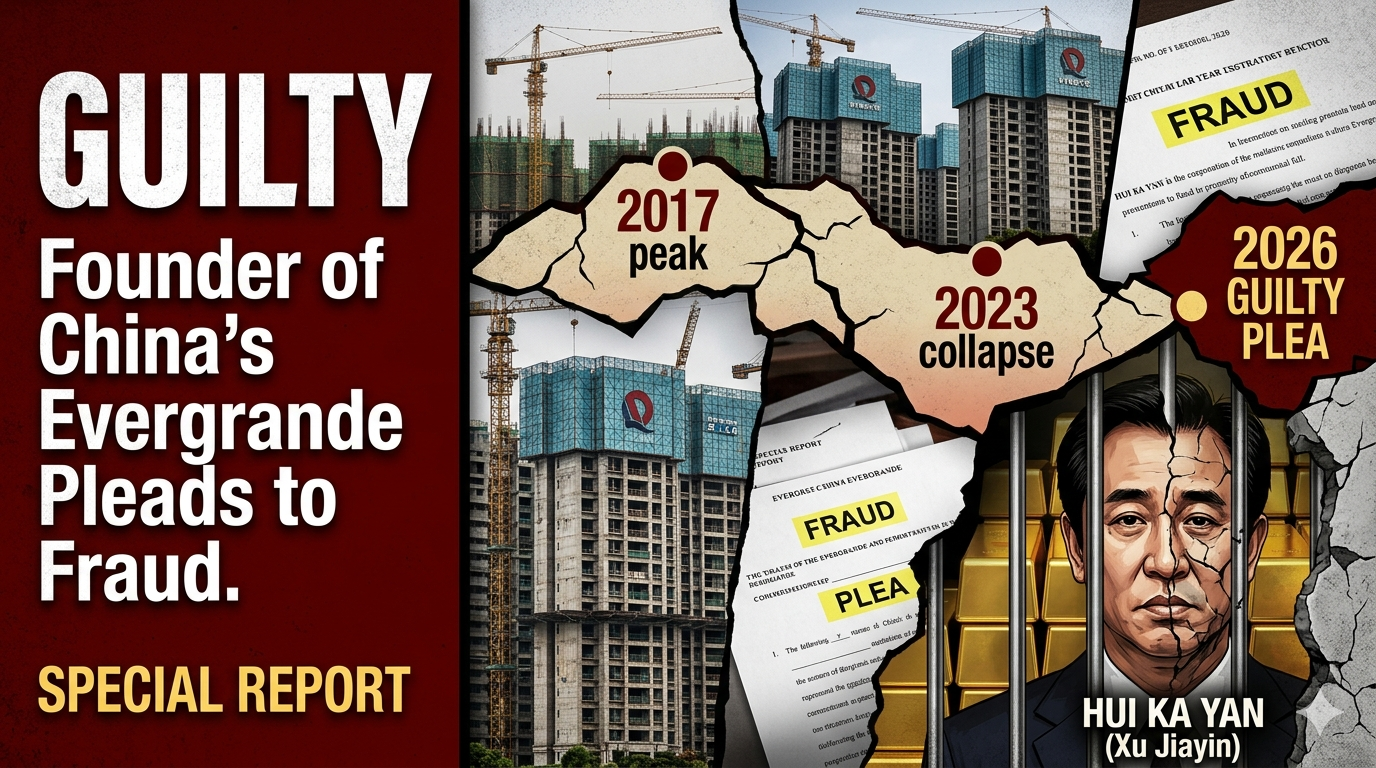
Founder of China’s Evergrande Pleads Guilty to Fraud
The founder of China Evergrande Group, Hui Ka Yan, has pleaded guilty to multiple serious charges, including embezzlement and corporate bribery. The admission, made during a public hearing in Shenzhen on April 13 and 14, marks a critical development in one of the biggest corporate collapses in modern Chinese history.
According to statements from the court, Hui expressed remorse for his actions, acknowledging wrongdoing as the legal proceedings unfolded. While the court has yet to deliver its final verdict, the guilty plea itself represents a major turning point in the long-running Evergrande crisis.
A Giant’s Rise and Fall
Once considered China’s largest real estate developer, Evergrande had a market valuation exceeding $50 billion at its peak. Founded in 1996 by Hui, the company rapidly expanded during China’s economic boom, driven largely by aggressive borrowing and large-scale property development.
At its height, Evergrande managed around 1,300 projects across more than 280 cities. However, its expansion came at a cost. The company accumulated over $300 billion in debt, earning it the label of the world’s most indebted property developer.
The crisis began to unfold in 2021 when new government regulations aimed at controlling excessive borrowing in the property sector tightened financial conditions. These measures exposed Evergrande’s fragile financial structure, eventually leading to its collapse.
Misuse of Funds and Unfinished Projects
During the trial, the court revealed that Evergrande had collected millions of dollars in pre-sale funds from homebuyers. These funds, which were meant to finance construction, were instead diverted into new projects. This mismanagement left hundreds of housing developments incomplete, affecting thousands of buyers across China.
The fallout from these actions has had far-reaching consequences, shaking investor confidence and placing pressure on domestic banks tied to the property sector.
Impact on China’s Economy
Evergrande’s collapse is widely seen as a key trigger for China’s ongoing property market downturn. The crisis has slowed economic growth and raised concerns about financial stability in the country.
The company’s struggles also highlight broader issues within China’s real estate industry, particularly the risks associated with high debt levels and speculative expansion.
From Billionaire to Legal Trouble
Hui’s journey is a dramatic one. Born into modest circumstances and raised by his grandmother, he built a vast business empire that extended beyond real estate into electric vehicles, food, beverages, and even football. Evergrande also owned a major stake in Guangzhou FC, once one of the top teams in the country.
At his peak in 2017, Hui was named Asia’s richest person, with an estimated net worth of $42.5 billion. However, his fortunes declined rapidly alongside Evergrande’s downfall.
In March 2024, Hui was fined $6.5 million and banned for life from China’s capital markets after authorities found that his company had overstated revenues by $78 billion.
What Comes Next?
While Hui has pleaded guilty, the final sentencing is still pending. The outcome of this case will be closely watched, as it may set a precedent for how China handles corporate misconduct in its struggling property sector.
For many observers, this case symbolizes the end of an era of unchecked growth in China’s real estate market—and the beginning of stricter oversight and accountability.