Why Is Gucci So Expensive Compared to Others?
When it comes to luxury fashion, few brands stand out like Gucci. Known for its bold designs, iconic logos, and premium quality, Gucci has built a reputation that places it among the most expensive fashion brands in the world. But what exactly makes Gucci so costly compared to other brands? Let’s break it down.
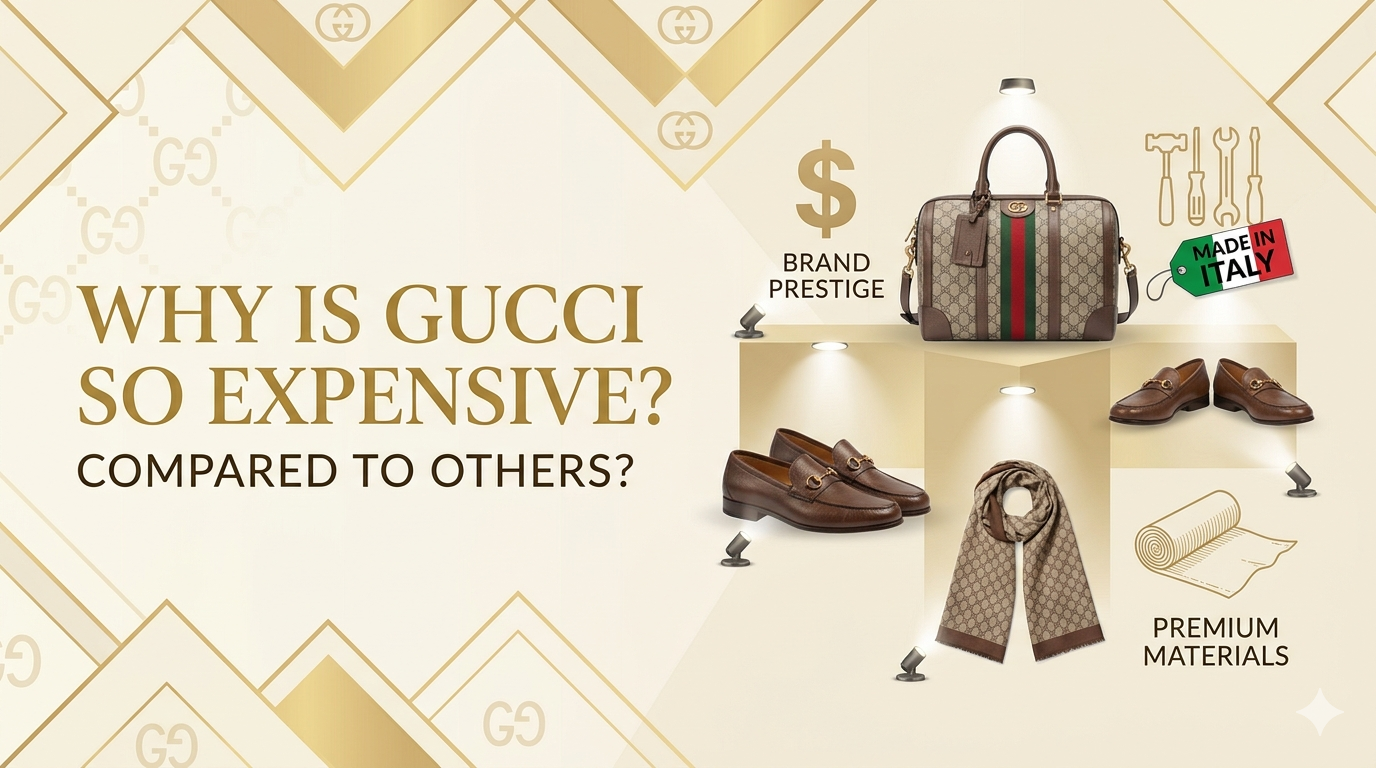
1. Strong Luxury Brand Identity
Gucci is more than just a fashion label—it’s a global status symbol. Founded in 1921 in Florence, Italy, the brand has spent decades building its image as a high-end, aspirational name. Wearing Gucci is often associated with wealth, style, and exclusivity.
This powerful branding allows Gucci to charge premium prices because customers aren’t just buying a product—they’re buying prestige and identity.
2. High-Quality Materials
One of the main reasons behind Gucci’s high price is the use of premium materials. From fine Italian leather to high-grade fabrics, every Gucci product is made with top-tier resources.
Whether it’s a handbag, shoes, or clothing, the materials are carefully sourced to ensure durability, comfort, and luxury. This level of quality naturally increases production costs.
3. Expert Craftsmanship
Gucci products are often handmade or require significant human involvement. Skilled artisans in Italy craft many items, ensuring attention to detail and perfection.
Unlike mass-produced fashion, this craftsmanship takes time, expertise, and precision—factors that significantly raise the overall price.
4. Limited Production and Exclusivity
Gucci doesn’t produce its items in unlimited quantities. Many collections are released in limited numbers, making them more exclusive.
This scarcity creates higher demand. When fewer people can own a product, its perceived value increases—allowing Gucci to maintain higher prices.
5. Innovative and Trend-Setting Designs
Gucci is known for pushing boundaries in fashion. Under creative direction from designers like Alessandro Michele, the brand has introduced bold, unique styles that often set global trends.
Innovation comes with higher design and development costs, which are reflected in the final price.
6. Heavy Marketing and Celebrity Influence
Gucci invests heavily in marketing campaigns, fashion shows, and collaborations with celebrities and influencers. You’ll often see stars and public figures wearing Gucci on red carpets and social media.
This global exposure strengthens the brand’s desirability and justifies its premium pricing strategy.
7. Retail Experience and Packaging
From luxurious store interiors to premium packaging, Gucci offers a complete high-end shopping experience. Walking into a Gucci boutique is designed to feel exclusive and elite.
All these elements—from store design to customer service—add to operational costs, which are included in the product pricing.
8. Heritage and Legacy
With over a century of history, Gucci has established itself as a heritage brand. Its long-standing reputation adds intangible value to every product.
Customers are often willing to pay more for a brand with such a rich legacy and global recognition.
Conclusion
Gucci’s high prices are not based on a single factor but a combination of branding, quality, craftsmanship, exclusivity, and marketing. While you may find cheaper alternatives, Gucci offers a unique blend of luxury and status that many consumers find worth the investment.