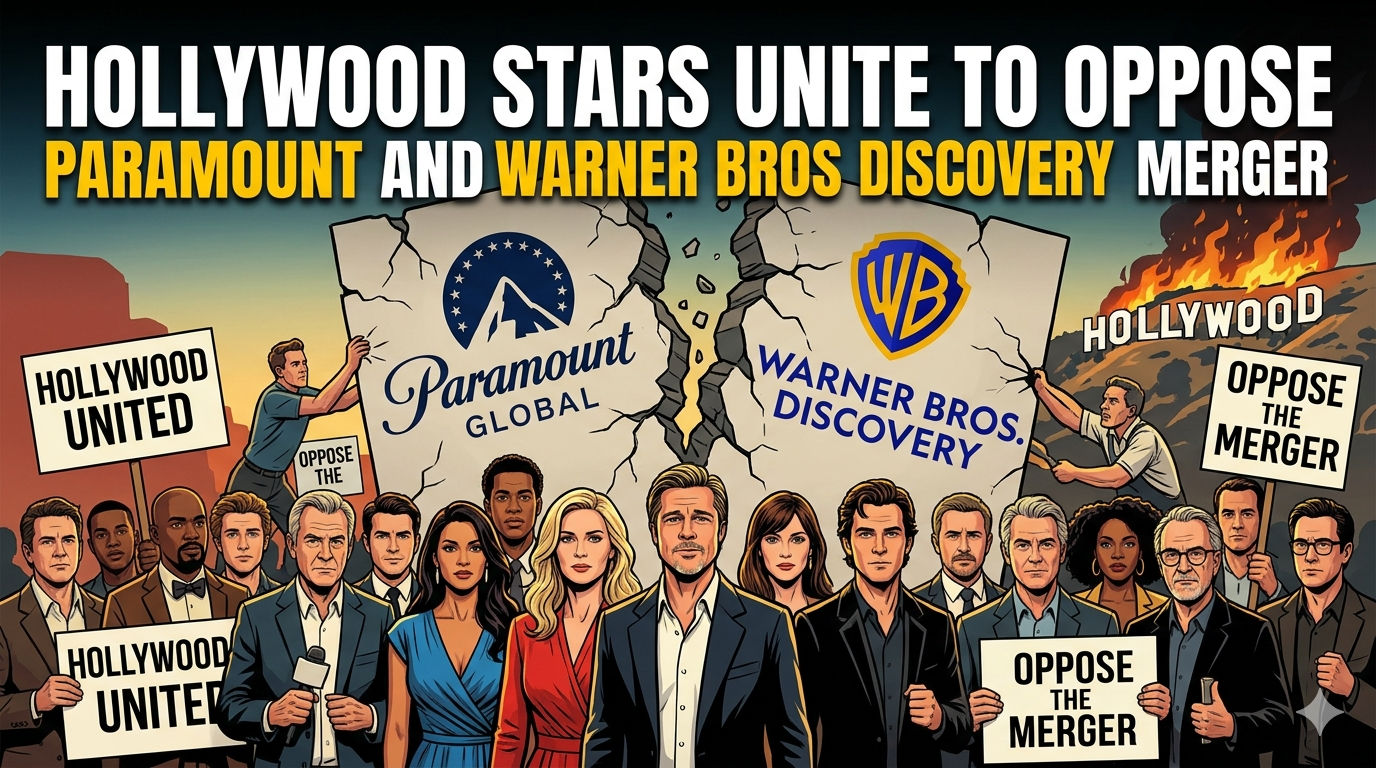
Hollywood Stars Unite to Oppose Paramount and Warner Bros Discovery Merger
More than 1,400 actors, directors, and filmmakers have joined forces to oppose the proposed merger between Paramount and Warner Bros. Discovery. The growing resistance highlights deep concerns about the future of the entertainment industry, which is still recovering from recent economic and structural challenges.
A Powerful Open Letter from Industry Leaders
The opposition was formalized through an open letter signed by some of Hollywood’s most recognizable names, including Emma Thompson, Ben Stiller, Javier Bardem, and Rose Byrne. The letter argues that the merger would further consolidate an already concentrated media landscape, ultimately harming both creators and audiences.
Other prominent figures such as Kristen Stewart, Kristin Scott Thomas, and Glenn Close also expressed strong opposition, with more industry professionals continuing to add their names.
Concerns Over Industry Consolidation
At the heart of the protest is the fear that the $111 billion merger would reduce the number of major US film studios to just four. Critics argue this would lead to fewer job opportunities, reduced competition, and limited creative diversity.
The letter warns that such consolidation would result in:
- Fewer opportunities for filmmakers and artists
- Job losses across the production ecosystem
- Higher costs for audiences
- Reduced variety in film and television content
Damon Lindelof, known for co-creating popular series, also voiced his concerns publicly. He emphasized that mergers typically mean fewer films and TV shows, ultimately shrinking opportunities for creatives and workers alike.
Industry Still Recovering from Recent Disruptions
The proposed deal comes at a time when Hollywood is still grappling with the after-effects of the COVID-19 pandemic and the dual labor strikes of 2023. Additionally, the rise of streaming platforms and shifting consumer behavior have already disrupted traditional business models.
Many industry insiders believe this merger could further destabilize an already fragile ecosystem.
Paramount’s Response
In response to the backlash, Paramount has defended the merger, stating its commitment to supporting talent and expanding opportunities. The company insists that the deal will enable more projects to be greenlit and help deliver high-quality content to global audiences.
Leadership has also emphasized that both studios would continue to operate as separate entities, with plans to release at least 30 feature films annually.
A Call for Regulatory Intervention
The open letter concludes with a call to regulators, including Rob Bonta, to block the merger. Signatories argue that intervention is necessary to preserve competition, protect jobs, and maintain creative diversity within the industry.
The Future of Hollywood at Stake
As the debate continues, the proposed merger has become a focal point in a larger conversation about the future of Hollywood. While studios argue that consolidation is necessary to compete in a rapidly evolving market, many creatives fear it could come at the cost of innovation, diversity, and opportunity.
With more voices joining the opposition, the outcome of this merger could shape the direction of the global entertainment industry for years to come.