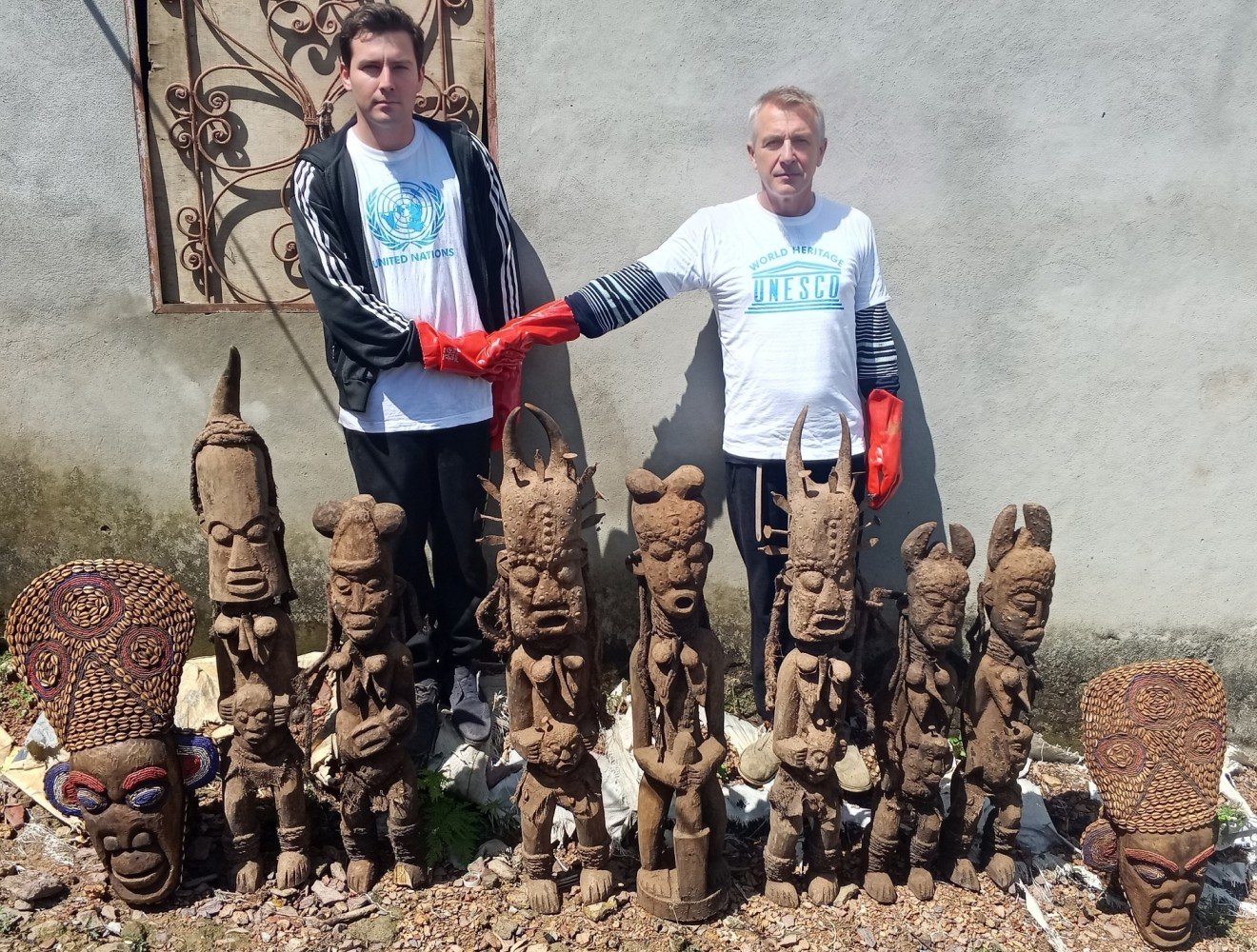
Nwivoen Mbzien: Preserving the Historical Legacy of an Ancient African Kingdom
Introduction
Cultural artefacts serve as invaluable links between the present and the past, offering insights into the traditions, beliefs, and achievements of earlier civilizations. Among the most significant cultural treasures associated with the history of Cameroon is the Nwivoen Mbzien Collection, a remarkable group of nine ancient statues originating from Baligan’sin Village in the North West Region of Cameroon.
Dating back to the seventeenth century, this extraordinary collection has survived for nearly four hundred years and remains an important symbol of the historical legacy of the ancient Mangeh Kingdom. Its cultural significance, artistic quality, and documented history have earned recognition among scholars, heritage enthusiasts, and collectors of traditional African art.
Historical Origins of the Collection
The Nwivoen Mbzien collection was created around 1680 during a period when traditional kingdoms played a central role in social, political, and cultural life throughout the region.
The collection was crafted to honor and commemorate important figures whose contributions shaped the foundation of the ancient kingdom.
Individuals Represented
The statues honor:
- King Mangeh, founder of the kingdom
- Royal ancestors
- Queen mothers
- Traditional leaders
- Celebrated warriors
- Founding heroes of the community
Through these sculptures, the achievements and memories of these historical figures were preserved for future generations.
The Ancient Kingdom of Mangeh
The history of Nwivoen Mbzien is closely linked to the story of King Mangeh and his descendants.
Historical traditions describe King Mangeh as the founder of a kingdom whose descendants later established several neighboring communities after leadership disputes following his death.
Communities Connected to the Mangeh Lineage
- Baligan si’in
- Bafanji
- Baligashu
- Balikumbat
- Bamunkumbit
Despite developing into separate communities, these villages continued to share common ancestral roots and cultural traditions.
Nwivoen Mbzien became one of the strongest symbols connecting them to their shared history.
Cultural Significance of Nwivoen Mbzien
For centuries, the collection has remained a central element of cultural identity among the descendants of the Mangeh Kingdom.
Symbolic Meaning
The collection represents:
- Ancestral remembrance
- Historical continuity
- Traditional leadership
- Community identity
- Cultural pride
- Heritage preservation
These values have contributed significantly to the collection’s enduring importance.
Traditional Heritage and Community Memory
Historical accounts indicate that the collection was closely associated with important ceremonial and cultural activities.
Historical Associations
The collection has traditionally been linked with:
- Cultural festivals
- Royal ceremonies
- Community gatherings
- Ancestral commemorations
- Traditional observances
These practices reinforced the role of the collection as a symbol of collective memory and cultural continuity.
A Journey Across Generations
The Nwivoen Mbzien collection has experienced a remarkable historical journey spanning more than three centuries.
During different periods, custody of the collection changed among communities connected to the Mangeh lineage. These transitions reflected the complex historical relationships between the villages while also demonstrating the value placed upon the collection.
Despite changing custodians, the artefacts remained carefully protected and preserved.
Historical Timeline
1680
The collection is created by artisans in Baligan si’in.
Early 18th Century
Custody transfers to Baligashu Village.
Mid-18th Century
The artefacts return to Baligan si’in through negotiated settlement.
Late 18th Century
The collection enters the custody of Bafanji Village.
Early 19th Century
Control returns to Baligashu Village.
Mid-19th Century
The collection is preserved by Bamunkumbit Village for several decades.
Late 19th Century
The collection returns permanently to Baligan’sin Village, where it remains today.
Authentication and Historical Documentation
The documented history of Nwivoen Mbzien contributes significantly to its importance.
German Colonial Authentication
In 1912, German colonial experts examined the collection and issued an official Certificate of Cultural Authenticity.
This document serves as an important historical reference and supports the collection’s documented provenance and preservation history.
UNESCO Cultural Heritage Registration
The collection gained international attention in 2012 through its registration under the UNESCO International Cultural Heritage Database.
Registration Information
UNESCO Registration Number: UNESCO003426UG756-CM
The registration recognized:
- Historical importance
- Cultural heritage value
- Traditional craftsmanship
- Preservation efforts
- Educational significance
This recognition highlighted the collection’s contribution to the preservation of African cultural heritage.
Artistic Excellence
Experts recognize the collection as an outstanding example of traditional African artistic craftsmanship.
Distinctive Features
- Handcrafted sculptures
- Historical authenticity
- Traditional artistic techniques
- Rich symbolic meaning
- Exceptional preservation
These qualities have helped establish Nwivoen Mbzien as a highly respected cultural collection.
Valuation and Global Interest
The rarity and significance of the collection have led to substantial appraisals by cultural heritage specialists.
Estimated Total Value
More than USD $7 Million
Valuation Breakdown
Baligansin Reliquary Heads
- Two artefacts
- Estimated value of USD $1.7 million each
Royal Sculptures
- Seven artefacts
- Estimated value of USD $500,000 each
The collection is widely regarded as a museum-quality cultural asset of exceptional rarity.
International Recognition
Today, Nwivoen Mbzien attracts growing interest from around the world.
Visitors and Researchers
The collection appeals to:
- Historians
- Museum curators
- Cultural scholars
- Heritage organizations
- Art collectors
- International tourists
Its historical depth and cultural significance continue to generate scholarly and public interest.
Protecting a Cultural Legacy
The preservation of Nwivoen Mbzien reflects a commitment to safeguarding cultural heritage for future generations.
By maintaining and protecting the collection, communities help preserve:
- Historical knowledge
- Traditional customs
- Cultural identity
- Artistic heritage
- Ancestral memory
This commitment ensures that the collection remains an important educational and cultural resource.
Conclusion
The Nwivoen Mbzien Collection stands as one of the most remarkable cultural heritage treasures associated with the history of Cameroon and the ancient Mangeh Kingdom. Nearly four centuries after its creation, the collection continues to embody the traditions, artistry, and historical achievements of the communities that preserved it.
With documented authenticity, international recognition, exceptional craftsmanship, and an estimated value exceeding $7 million, Nwivoen Mbzien remains a powerful symbol of African cultural heritage and a lasting testament to the importance of preserving history for future generations.
