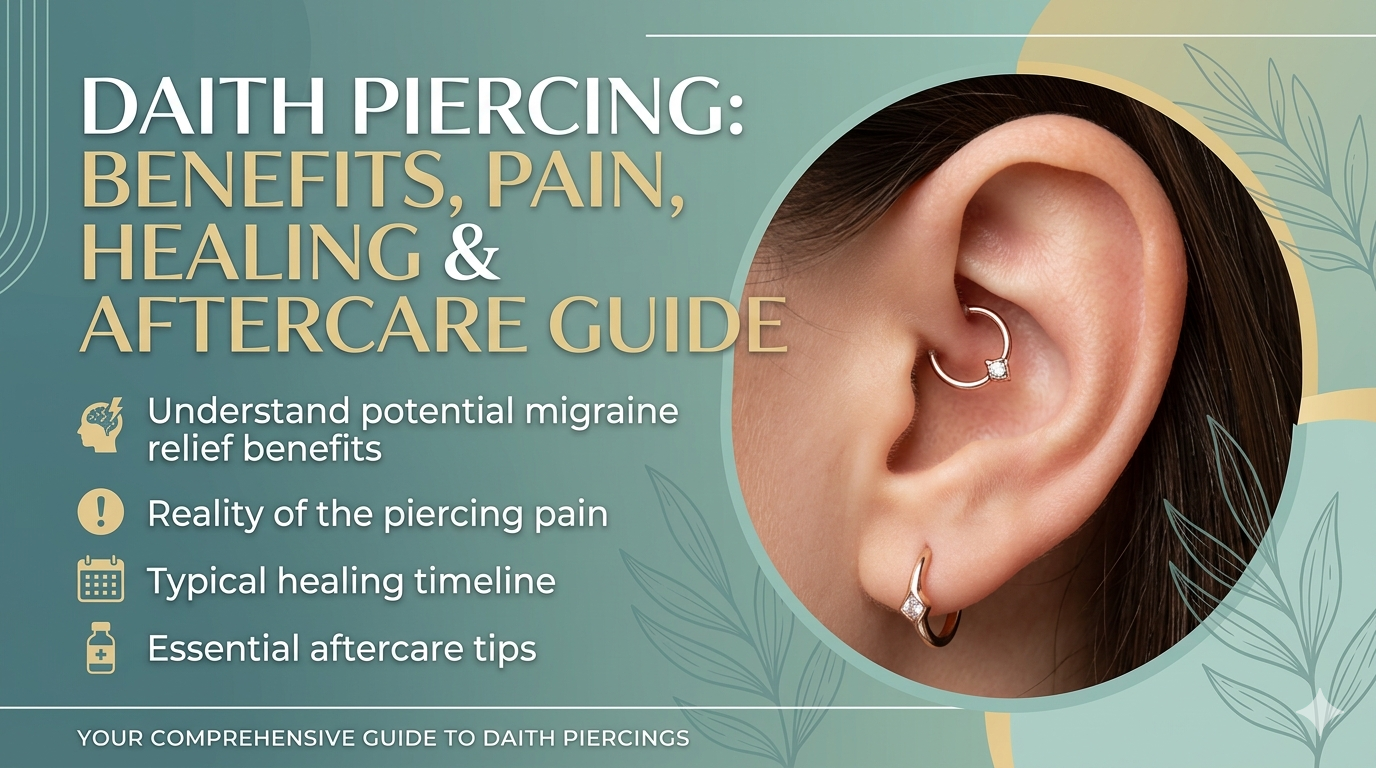
Daith Piercing: Complete Guide to Pain, Healing & Care
A daith piercing is one of the most unique and stylish ear piercings you can get today. Positioned in the innermost cartilage fold of the ear, this piercing has gained massive popularity not just for its aesthetic appeal but also for its rumored health benefits, particularly in reducing migraines.
In this detailed guide, we will cover everything you need to know about daith piercing, including pain level, procedure, healing time, risks, and proper aftercare.
What Is a Daith Piercing?
A daith piercing is a type of ear cartilage piercing that goes through the small fold of cartilage just above the ear canal. Unlike traditional lobe piercings, this one requires precision and should always be done by a professional piercer.
This piercing is often chosen for its bold and edgy look. Many people also believe that a daith piercing may help relieve migraine headaches, although scientific evidence is still limited.
Daith Piercing Pain Level
Pain is one of the most common concerns when getting a daith piercing. Since it passes through thick cartilage, the pain level is typically higher than a standard ear piercing.
- Pain rating: 5 to 7 out of 10
- Sensation: Sharp pinch followed by pressure
- Duration: Only a few seconds
However, everyone’s pain tolerance is different, so your experience with a daith piercing may vary.
Daith Piercing Procedure
Getting a daith piercing involves a few simple but precise steps:
- The piercer cleans and sterilizes your ear
- The exact spot is marked carefully
- A sterile needle is used (never a gun)
- Jewelry is inserted immediately
The entire daith piercing process usually takes only a few minutes, but proper placement is crucial for both comfort and healing.
Healing Time for Daith Piercing
Healing a daith piercing takes longer than standard piercings because cartilage heals slowly.
- Average healing time: 6 to 9 months
- Full healing: Up to 12 months
During this period, consistent care is essential. Avoid touching or twisting your daith piercing, as it can delay healing or cause infection.
Daith Piercing Benefits
Many people get a daith piercing not just for style but also for possible health benefits.
1. Migraine Relief
Some believe that a daith piercing works similarly to acupuncture by targeting pressure points that may reduce migraine symptoms. However, medical evidence is limited.
2. Unique Style
A daith piercing offers a distinctive and fashionable look that stands out from traditional piercings.
3. Custom Jewelry Options
You can choose from hoops, captive bead rings, or heart-shaped jewelry to personalize your daith piercing.
Risks and Side Effects
Like any body modification, a daith piercing comes with potential risks:
- Infection
- Swelling and redness
- Keloid or scarring
- Jewelry rejection
To minimize these risks, always get your daith piercing done by a licensed professional and follow aftercare instructions carefully.
Daith Piercing Aftercare Tips
Proper aftercare is essential for healing your daith piercing safely.
Daily Care Routine
- Clean twice daily with saline solution
- Avoid touching with dirty hands
- Do not rotate the jewelry
What to Avoid
- Swimming in dirty water
- Sleeping on the pierced side
- Using alcohol or harsh chemicals
Following these steps will help your daith piercing heal faster and prevent complications.
Best Jewelry for Daith Piercing
Choosing the right jewelry is important for comfort and healing.
- Surgical steel
- Titanium
- 14k or 18k gold
Avoid cheap metals, as they can irritate your daith piercing and slow the healing process.
Is Daith Piercing Worth It?
A daith piercing is definitely worth considering if you want a unique ear style and are willing to commit to proper care. While the pain and healing time may be slightly higher, the aesthetic appeal and potential benefits make it a popular choice.
Final Thoughts
A daith piercing is more than just a fashion statement—it’s a bold and distinctive way to express your personality. Whether you’re drawn to its look or curious about its potential migraine relief benefits, understanding the procedure, risks, and aftercare is essential.
If you’re planning to get a daith piercing, make sure to choose a professional piercer and follow all aftercare guidelines to ensure a smooth healing journey.