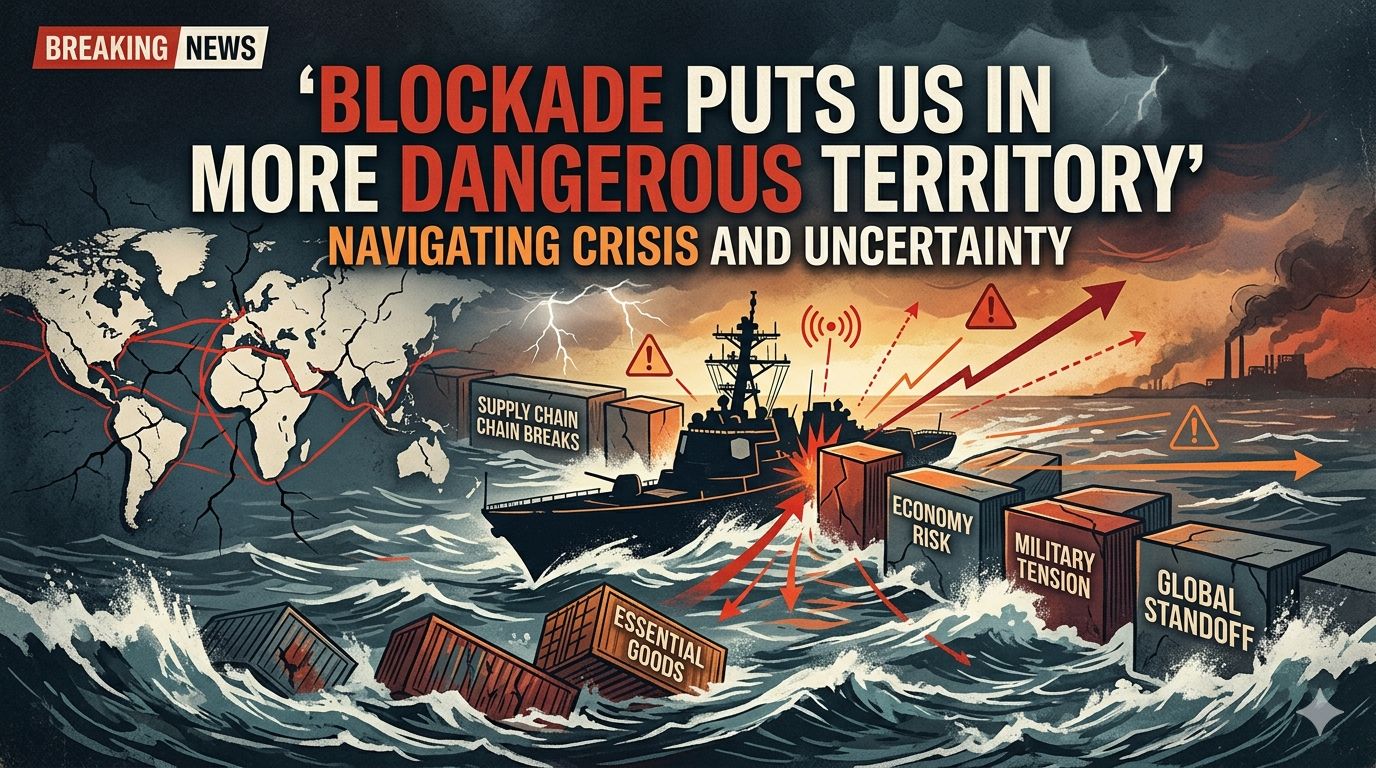
Blockade Puts US in Even More Dangerous Territory
The growing use of blockades in global conflicts is pushing the United States into increasingly dangerous territory. As geopolitical tensions rise, blockades are no longer isolated strategies—they are becoming flashpoints that risk escalating into broader military confrontations. Whether in strategic waterways or contested regions, these actions are testing the limits of diplomacy and global stability.
A blockade, by definition, restricts the movement of goods, services, or military forces in and out of a specific area. While often used as a tool of pressure, it can quickly be interpreted as an act of aggression. For the United States, involvement—direct or indirect—in such scenarios raises the stakes significantly. It forces policymakers to navigate a fine line between defending allies and avoiding direct conflict.
One of the most concerning aspects of modern blockades is their potential impact on global trade. Critical shipping routes carry essential resources such as oil, food, and raw materials. Any disruption can trigger economic shocks worldwide, including inflation and supply chain breakdowns. For the US, which is deeply interconnected with global markets, these disruptions can have immediate domestic consequences.
Additionally, blockades increase the risk of military miscalculation. A single incident—such as the interception of a vessel or a misunderstanding between naval forces—can escalate rapidly. In today’s tense environment, where rival powers are already on edge, such incidents could spiral into open conflict. This puts the US in a precarious position, especially when commitments to allies demand a strong response.
There is also a legal and ethical dimension to consider. International law governs the use of blockades, but interpretations often vary. Actions seen as justified by one nation may be viewed as unlawful by another. This ambiguity complicates the US response and can strain relationships with both allies and neutral countries.
Moreover, domestic pressure plays a significant role. US leadership must balance international responsibilities with public opinion at home. Prolonged involvement in high-risk situations can lead to political divisions and increased scrutiny over foreign policy decisions.
In conclusion, the use of blockades in today’s geopolitical climate is pushing the United States into increasingly dangerous territory. The risks are not limited to military confrontation but extend to economic disruption and diplomatic fallout. As tensions continue to rise, careful strategy and strong diplomatic efforts will be essential to prevent escalation and maintain global stability.